Registered Scotish Charity No. SC043826. Showcasing all aspects of Scottish Military History, from Mons Graupius to Afghanistan
Showing posts with label 64th Highlanders. Show all posts
Saturday, 27 August 2011
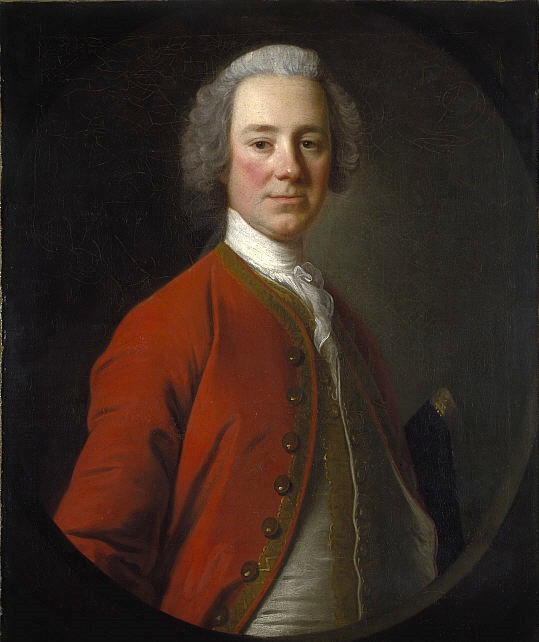
Sir Hector Munro - Who's Who in Scottish Military History
We’ve mentioned Sir Hector Munro before in the Who’s Who about Lord Macleod. They were contemporaries of each other but while Macleod was a Jacobite, Munro was a staunch supporter of the Hanoverians. When MacLeod was an exile in Europe, Munro was rising through the ranks in the British Army.
In his long career Munro served in many parts of the world but it was in India he had his biggest success, and biggest failure.
It’s not clear exactly when he was born but his father moved from Novar to Clayside at Dunrobin Mains, near Golspie when he was a baby, so he was probably born in 1725-1726.
He was first commissioned into Loudon’s 64th Highlanders in 1747 but biographies mention previous service against the Jacobites. He may well have served in one of the Independent Companies raised by the Northern clans in 1745-46 and under Loudon’s command which were beaten at Inverness and Dornoch. If he was captured, as has been rumoured, then he was unlikely to have taken part in Cromartie’s defeat at Golspie.
After being commissioned in the 64th Highlanders he went with them to the Low Countries, where they were serving in the War of Austrian Succession. His regiment was in action at Bergen-op-Zoom near Antwerp but saw little service apart from that. It was disbanded in June 1748 at the end of hostilities.
Munro was after an army life so transferred into the 48th Foot as an ensign, and then in the days of purchasing commissions he bought himself a lieutenancy in the 31st Foot in Ireland, and a few years later he was a Captain and company commander of the 2nd battalion 31st Foot (which became the 70th Foot in 1758).
Another regiment soon followed in 1759 when Munro got his majority in the newly raised 89th Highlanders. This was during the Seven Years War and Imperial commitments saw the 89th being sent to India.
With Munro in charge the 89th arrived outside French held Pondicherry in Madras in September 1760. They were there until early 1761 when they were sent to Bombay after the French capitulated.
When the 89th sailed for home in 1763 Munro elected to stay in India. In 1764 he was sent to his third East Indian Company Presidency in India, Bengal, with some other European troops to help quell a mutiny amongst EIC sepoys.
No believer in taking a soft line Munro decided that the only way to deal with the sepoys, whether their grievances were justified or not, was to execute the ringleaders in typical EIC fashion - by tying them to the wheels of a cannon and blowing them apart. He also disbanded the most rebellious native regiment.
With the mutiny suppressed Munro was given charge of the Bengal Presidency Army and took it north from Calcutta to head off an invasion force of Mughals on the Bihar – Oudh border.
On 22nd September 1764 Munro’s army met the Mughals at Buxar, under the command of Nawab Wazir Shuja ud-Daula.
On paper it looked like there would be no contest. The Indians had a force of 40,000 and Munro had only 7,000 men. However since taking command Munro had drilled his men hard to prepare for battle and it would be no walkover.
In a shocking display of underestimating your opponent Shuja ud-Daula left his prepared defences and advanced over open ground to meet Munro’s force.
Wave after wave of Mughal cavalry attacked the Bengal Presidency Army but Munro’s training had paid off and the disciplined firepower of the redcoats held off the horsemen.
Munro then showed his tactical prowess by throwing forward his sepoys at the point of the bayonet onto his opponent’s left flank. The Indians were unprepared for this assault and fell back. Retreat soon turned to rout as the whole Indian front line collapsed.
Whilst Plassey in 1757 may have been the decisive battle to decide which European power influenced Indian affairs, it was the overwhelming victory at Buxar which led to the East India Company becoming the de facto rulers of India’s richest provinces and it tuned British traders into rulers.
It was the high point of Munro’s career and with a very large haul of prize money he resigned his commission and returned to Scotland in early 1765. His uncle had left him the Munro estate at Novar in Cromarty near Evanton, and his money bought him a seat in Westminster as MP for Inverness Burghs. For the next few years he led the life of a country laird spending his Indian fortune on improving his house and estate.
Investment mistakes and loss of money in the 1770s probably led to his decision to rejoin the army. India was where he had made his name and his fortune over ten years before; so with his EIC and parliamentary connections, and his reputation preceding him, he was appointed in 1777 as commander-in-chief at Madras. Now he also had a local royal commission as an EIC major-general and a seat on the Madras council.
Things were complicated in India when Munro arrived. Struggles for control of the East India Company were taking place in London and in Madras the local rulers were not as compliant as the ones in Bengal. It was a recipe for future disaster.
Munro had to deal with weak allies, a strong and antagonistic neighbour, and the involvement of the French and Dutch. Both had enclaves in India and the American War of Independence saw them become allies of the Unites States and enemies of Britain. When the news of the French taking the American’s side reached Munro in 1778 he immediately marched south to take their base at Pondicherry. He had last been there nearly twenty years before with the 89th Highlanders and once again the French capitulated.
Eager to capitalise on his success he captured the other French settlements on the Coromandel Coast / Malabar Coast. Unfortunately this eagerness to defeat the French antagonised Hyder Ali, the powerful ruler of Mysore at Seringapatam.
Ali had no love for the British and had beaten them in a war in 1768. He also considered the French possessions to have been under his protection. Munro’s attacks on Pondicherry was too much for Hyder Ali and he made preparations to march across the Eastern Ghats and onto the Carnatic Plain.
Time and again we’ve seen in our who’s who and on this day articles that pride comes before a fall; and once again a Scot in a position of power chose to ignore the advice of others and carry on regardless.
Hyder Ali and his son Tipoo Sultan amassed 90,000 men. It took time to assemble an army of that size and throughout 1779 and early 1780 it was obvious to everyone except Munro that he would be marching East in strength. Munro chose to ignore the signs. Even when reinforcements were sent to him, including the newly raised Lord Macleod’s Highlanders, they were sent to outlying posts.
In June 1780 Ali moved. Munro finally responded. Instead of ordering his outnumbered troops back to the protection of Madras to regroup he decided to push his force forward and consolidate his army in the field.
The man who lead the Bengal Army to victory against impossible odds at Buxar must have thought he could outfight Ali’s native host. Munro was sadly misjudging his opponent. Ali’s army was well trained by French advisors, and equipped with the latest guns. As Munro advanced on Arcot he expected his other troops to meet him at Conjeeveram.
Unfortunately for Munro his supply train was not as good as he had hoped and his advance bogged down. Ali advanced to meet him before he could congregate all his forces, and Colonel Baillie’s column containing Macleod’s Highlanders was attacked and soundly beaten at the Battle of Pollilur by Tipoo Sultan’s force. 2,800 men, including the future general, David Baird, were killed or captured.
Munro knew his position was untenable and finally retreated to Madras leaving Hyder Ali in control of most of the Carnatic Plain.
Munro’s handling of the affair nearly wrecked his career. He was criticised by Macleod on his tactics and his failure to support Baillie’s men once battle commenced. Certainly no other East India Company in the Carnatic had been beaten so badly. Rather than being sacked Munro was effectively demoted when Eyre Coote was sent to take command of the Madras Army. Munro continued to serve under Coote and attempted to rebuild his reputation as Coote took the fight back to Ali.
Eventually after a spell in his sick bed in Madras he was given independent command again. This time it was to capture the Dutch port of Negapatam in November 1791. Munro’s old skill returned and this attack was a success.
Munro’s second spell in India was now coming to an end. With the campaigning over he resigned his appointment and returned to London. Mixed fortunes awaited him at home. He was granted a knighthood for capturing Pondicherry and then sacked by the East India Company for losing Baillie’s column. He must have cried all the way to the bank because he was awarded yet more prize money and was made a major general in the British army.
He remained a soldier on paper an eventually becoming a full general on 1st January 1798 and he was also Colonel of the 42nd Highlanders (the Black Watch).
His main activity between his return to the UK in 1782 and his death in 1805 seems to have been interesting himself on improving his estate in the then current fashion of replacing tenants with sheep. The man who restored order in Bengal by blowing mutineers from his cannon had no problems bringing the army in to restore order when his improvements provoked protests in the summer of 1792.
However he also showed a slightly more benevolent side when he built a folly on his land to provide jobs during a period of unemployment. Fyrish Monument is said to represent the gates of Negapatam, the city he had captured in 1781 and which had saved his reputation. It doesn’t, but it certainly has an Asian feel to it, and given he renamed many of the parks on his estate after places in India then it’s likely Fyrish was built to remind him of his many years in the sub-continent.
Finally was it civic duty as the local MP, or right-wing tendencies, which led him to provide a substantial sum of money to the building of the new court house and jail in Inverness? The building is gone but Munro’s steeple and clock still survive to mark his contribution to his constituency’s policing.
It was at Novar where Munro died. Uncertainty over his date of birth was matched by the uncertainty of his date of death. Sources quote late December 1805 or early January 1806. His headstone says 27th December 1805.
Munro is a little known figure in his own land. I come from East Sutherland and had never heard of him until recently, but he was an important figure in the history of the British in India. His reforms in the Bengal and Madras EIC armies and his victory at Buxar had laid solid foundations for British supremacy in India and the establishment of the Raj.
Saturday, 26 March 2011
The Capture of Prince Charlie’s gold - On this day in Scottish military history - 1746
A little known but important episode during the Jacobite Rebellion took place 265 years ago today.
Even though the Jacobites had retreated from the Lowlands, in March 1746 they were still a force to be reckoned with in the North. The main government force was still in Aberdeen and Loudon’s force had been routed from Dornoch. Jacobites were roaming the Highlands attacking government barracks and Independent Companies.
In mid march the French decided to send £13,000 in gold, arms and other supplies to Inverness to help their allies, and sent the sloop “Le Prince Charles Stuart" to the Moray Firth. (the ship was an ex-Royal Navy sloop HMS ‘Hazard’ which had been captured by Jacobites in Montrose harbour in late 1745 and sailed to Dunkirk)
With Irish volunteers from the French Regiment Berwick and Scots from the Garde Eccosois to guard the cargo, and exiled Scots officers in French and Spanish service returning home to join the Jacobite army; Capitaine de frigate George Talbot took his ship northwards.
By the 24th of March they were approaching their destination of Portsoy in Banffshire (coincidentally about 10 miles from where German spies landed in 1940). Unfortunately for the French they came across a squadron of Royal Navy ships off Troup Head barring their way to Portsoy. Capitaine Talbot had to quickly turn northwards to try and escape the British ships.
The frigate HMS “Sheerness” was detached from the squadron and gave chase. She was about twice as big as “Le Prince Charles Stuart” and it was a moonlit night so Talbot had to keep pushing his ship further north and further away from the Jacobite base to keep ahead of the “Sheerness”.
By daylight of the 25th “Le Prince Charles Stuart” was off the Pentland Firth and still being chased by the “Sheerness”. Talbot knew if he tried to sail to the Minch he would be overhauled by the bigger ship. Hailing some local fisherman he found out that he had a chance if he made for the Kyle of Tongue where his smaller ship should be able to sail in but the “Sheerness” would not be able to follow.
The French ship would be trapped but the supplies could be put ashore with their guards and the ship could be scuttled to stop it being recaptured.
Unfortunately the Kyle was narrow and no-one on the ship knew the waters so it soon ran aground on a sandbank at Melness on the west bank of the Kyle. The “Sheerness” managed to sail far enough up the Kyle for its guns to be in range of the trapped “Le Prince Charles Stuart” and it started a punishing bombardment.

The British frigate outgunned the French sloop and it was taking a battering. When darkness fell Talbot ordered the gold and stores ashore. This prompted a landing of sailors and marines form the “Sheerness”. Knowing his situation was now hopeless, Talbot ordered all his unwounded crew ashore where they would march with the Jacobite soldiers overland to Prince Charles’s base at Inverness. Talbot couldn’t set fire to his ship to scuttle her because of the wounded on board who could not be taken with them.
For once luck was with Talbot. If he had beached on the eastern bank of the Kyle he would have been on the land of the government supporting Lord Reay. He had landed on the west bank and came across the Laird of Melness, William Mackay, who had Jacobite sympathies.
With two of Mackay’s horses to carry the gold and his sons as guides the French sailors, and Scots and Irish Jacobite soldiers, headed into the night to escape the Royal Navy sailors behind them.
That was the end of Talbot’s luck. The captain of the “Sheerness” sent more men ashore on the east bank of the Kyle to find loyal highlanders and they found Lord Reay. Reay had men of his own Independent Company of soldiers to hand and in the area there were remnants of Loudon’s force which had been chased from Dornoch two weeks earlier by Jacobites under the Duke of Perth.
Taking a hundred men with him, and ordering reinforcements to follow when they were ready; Reay marched down the east side of the Kyle to cut off the Jacobites.
By dawn of the 26th Talbot’s force had marched to the head of the Kyle of Tongue. At first they could see off any of Reay’s men who were trying to stop them but eventually Talbot’s men were surrounded by men of Lord Reay’s Independent Company, loyal Clan Mackay men and about 100 men of Loudon’s own 64th Highlanders. In all about 320 men by Talbot’s estimate. He may have been exaggerating the numbers but he was clearly outnumbered and his only option was surrender.
The Jacobites threw the gold into a nearby locahan (possibly Lochan Hakel) and then lay down their weapons.
The Highlanders quickly retrieved most of the gold from the shallow water but were in no great position of strength. A large Jacobite force from Dornoch under Coll Ban MacDonald of Barrisdale was marauding through Mackay lands looking for Reay and the remnants of Loudon’s force which had retreated to the North-West corner of Scotland. Reay feared he would now be a target for MacDonald and the rest of Cromartie’s force as soon as the news of the gold’s arrival in Scotland reached the Jacobites.
Taking the prisoners, the gold and his troops, Lord Reay left his home and boarded the “Sheerness”. The hastily repaired “Le Prince Charles Stuart” was refloated and sailed with them too.
After a brief stop in the Orkney the ships headed to Aberdeen; with them went the Jacobite pay chest. The meal in store at Inverness was now Prince Charles’s only method of paying his troops. Without payment of food his Highland troops would melt away into the glens so Inverness needed to be defended at all costs to preserve his army.
The loss of the French gold on 26th March 1746 helped seal the fate of the Jacobites. There would be no more retreat; they would have to face Cumberland’s army in the near future on a battlefield outside Inverness.
Even though the Jacobites had retreated from the Lowlands, in March 1746 they were still a force to be reckoned with in the North. The main government force was still in Aberdeen and Loudon’s force had been routed from Dornoch. Jacobites were roaming the Highlands attacking government barracks and Independent Companies.
In mid march the French decided to send £13,000 in gold, arms and other supplies to Inverness to help their allies, and sent the sloop “Le Prince Charles Stuart" to the Moray Firth. (the ship was an ex-Royal Navy sloop HMS ‘Hazard’ which had been captured by Jacobites in Montrose harbour in late 1745 and sailed to Dunkirk)
With Irish volunteers from the French Regiment Berwick and Scots from the Garde Eccosois to guard the cargo, and exiled Scots officers in French and Spanish service returning home to join the Jacobite army; Capitaine de frigate George Talbot took his ship northwards.
By the 24th of March they were approaching their destination of Portsoy in Banffshire (coincidentally about 10 miles from where German spies landed in 1940). Unfortunately for the French they came across a squadron of Royal Navy ships off Troup Head barring their way to Portsoy. Capitaine Talbot had to quickly turn northwards to try and escape the British ships.
The frigate HMS “Sheerness” was detached from the squadron and gave chase. She was about twice as big as “Le Prince Charles Stuart” and it was a moonlit night so Talbot had to keep pushing his ship further north and further away from the Jacobite base to keep ahead of the “Sheerness”.
By daylight of the 25th “Le Prince Charles Stuart” was off the Pentland Firth and still being chased by the “Sheerness”. Talbot knew if he tried to sail to the Minch he would be overhauled by the bigger ship. Hailing some local fisherman he found out that he had a chance if he made for the Kyle of Tongue where his smaller ship should be able to sail in but the “Sheerness” would not be able to follow.
The French ship would be trapped but the supplies could be put ashore with their guards and the ship could be scuttled to stop it being recaptured.
Unfortunately the Kyle was narrow and no-one on the ship knew the waters so it soon ran aground on a sandbank at Melness on the west bank of the Kyle. The “Sheerness” managed to sail far enough up the Kyle for its guns to be in range of the trapped “Le Prince Charles Stuart” and it started a punishing bombardment.
The British frigate outgunned the French sloop and it was taking a battering. When darkness fell Talbot ordered the gold and stores ashore. This prompted a landing of sailors and marines form the “Sheerness”. Knowing his situation was now hopeless, Talbot ordered all his unwounded crew ashore where they would march with the Jacobite soldiers overland to Prince Charles’s base at Inverness. Talbot couldn’t set fire to his ship to scuttle her because of the wounded on board who could not be taken with them.
For once luck was with Talbot. If he had beached on the eastern bank of the Kyle he would have been on the land of the government supporting Lord Reay. He had landed on the west bank and came across the Laird of Melness, William Mackay, who had Jacobite sympathies.
With two of Mackay’s horses to carry the gold and his sons as guides the French sailors, and Scots and Irish Jacobite soldiers, headed into the night to escape the Royal Navy sailors behind them.
That was the end of Talbot’s luck. The captain of the “Sheerness” sent more men ashore on the east bank of the Kyle to find loyal highlanders and they found Lord Reay. Reay had men of his own Independent Company of soldiers to hand and in the area there were remnants of Loudon’s force which had been chased from Dornoch two weeks earlier by Jacobites under the Duke of Perth.
Taking a hundred men with him, and ordering reinforcements to follow when they were ready; Reay marched down the east side of the Kyle to cut off the Jacobites.
By dawn of the 26th Talbot’s force had marched to the head of the Kyle of Tongue. At first they could see off any of Reay’s men who were trying to stop them but eventually Talbot’s men were surrounded by men of Lord Reay’s Independent Company, loyal Clan Mackay men and about 100 men of Loudon’s own 64th Highlanders. In all about 320 men by Talbot’s estimate. He may have been exaggerating the numbers but he was clearly outnumbered and his only option was surrender.
The Jacobites threw the gold into a nearby locahan (possibly Lochan Hakel) and then lay down their weapons.
The Highlanders quickly retrieved most of the gold from the shallow water but were in no great position of strength. A large Jacobite force from Dornoch under Coll Ban MacDonald of Barrisdale was marauding through Mackay lands looking for Reay and the remnants of Loudon’s force which had retreated to the North-West corner of Scotland. Reay feared he would now be a target for MacDonald and the rest of Cromartie’s force as soon as the news of the gold’s arrival in Scotland reached the Jacobites.
Taking the prisoners, the gold and his troops, Lord Reay left his home and boarded the “Sheerness”. The hastily repaired “Le Prince Charles Stuart” was refloated and sailed with them too.
After a brief stop in the Orkney the ships headed to Aberdeen; with them went the Jacobite pay chest. The meal in store at Inverness was now Prince Charles’s only method of paying his troops. Without payment of food his Highland troops would melt away into the glens so Inverness needed to be defended at all costs to preserve his army.
The loss of the French gold on 26th March 1746 helped seal the fate of the Jacobites. There would be no more retreat; they would have to face Cumberland’s army in the near future on a battlefield outside Inverness.
Sunday, 20 March 2011
The Rout of Loudon from Dornoch - On this day in Scottish Military History – 1746
When Loudon retreated north from Inverness he chose as his base the land of Southeast Sutherland around Dornoch. The Kyle of Sutherland and River Shin protected his flanks and by placing most of his men along the two rivers his aim was to stop the Jacobites reaching their sympathisers in Caithness and Orkney. Whilst at Dornoch Loudon had also been reinforced by nearly 400 clansmen of the Earl of Sutherland and 100 men from Lord Reay’s Clan Mackay.
The Jacobites were not happy to have such a large force of Hanoverian troops threatening their flanks and hampering the recruitment of new supporters from the North. It was decided that a frontal attack was out of the question, Loudon was in too strong a defensive position. Instead the Jacobites would land men by fishing boats across the Dornoch Firth from Tain to the sands at Lonemore, two miles west of Dornoch
Fishing boats were rounded up from the Moray coast under the noses of the Royal Navy, and the Duke of Perth took a force of 1,800 Jacobites north from Dingwall. Loudon was not expecting a seaborne invasion and had split his force in positions along the Kyle of Sutherland and River Shin to repel any landward attacks between Bonar and Lairg. A small number of Loudon’s troops guarded Meikle Ferry near Skibo but there were not enough to stop a large attack.
As the day broke on this day 265 years ago the Mackays guarding Meikle Ferry would have been shocked to see boat loads of Jacobites approaching them. Heavily outnumbered the Mackays fled. A company of the 64th Highlanders tried to intercept the Jacobites whilst they disembarked but in a highly professional operation the Jacobites landed hundreds of men in good order and secured their landing ground.
Loudon’s men knew they were in a very difficult position. Retreating through Dornoch they headed for Little Ferry at Loch Fleet. At the same time word was sent to Loudon who was inspecting his defences at Invershin.
Knowing the rest of his force was now in an untenable position Loudon scattered his troops. He sent the local recruits of Mackay and Sutherland men north through Lairg with some of his 64th Highlanders under the command of Lord Reay. Loudon took the rest of his regiment west with his loyal MacDonald and Macleod volunteers and eventually reached Skye a week later.
In a surprisingly efficient operation the Jacobites had routed Loudon’s small army with very little loss. They had opened up the North for supplies and recruits, captured a large number of prisoners and as a bonus they had found four ships hiding in Loch Fleet with valuable cargoes of arms and ammunition.
The Jacobites were not happy to have such a large force of Hanoverian troops threatening their flanks and hampering the recruitment of new supporters from the North. It was decided that a frontal attack was out of the question, Loudon was in too strong a defensive position. Instead the Jacobites would land men by fishing boats across the Dornoch Firth from Tain to the sands at Lonemore, two miles west of Dornoch
Fishing boats were rounded up from the Moray coast under the noses of the Royal Navy, and the Duke of Perth took a force of 1,800 Jacobites north from Dingwall. Loudon was not expecting a seaborne invasion and had split his force in positions along the Kyle of Sutherland and River Shin to repel any landward attacks between Bonar and Lairg. A small number of Loudon’s troops guarded Meikle Ferry near Skibo but there were not enough to stop a large attack.
As the day broke on this day 265 years ago the Mackays guarding Meikle Ferry would have been shocked to see boat loads of Jacobites approaching them. Heavily outnumbered the Mackays fled. A company of the 64th Highlanders tried to intercept the Jacobites whilst they disembarked but in a highly professional operation the Jacobites landed hundreds of men in good order and secured their landing ground.
Loudon’s men knew they were in a very difficult position. Retreating through Dornoch they headed for Little Ferry at Loch Fleet. At the same time word was sent to Loudon who was inspecting his defences at Invershin.
Knowing the rest of his force was now in an untenable position Loudon scattered his troops. He sent the local recruits of Mackay and Sutherland men north through Lairg with some of his 64th Highlanders under the command of Lord Reay. Loudon took the rest of his regiment west with his loyal MacDonald and Macleod volunteers and eventually reached Skye a week later.
In a surprisingly efficient operation the Jacobites had routed Loudon’s small army with very little loss. They had opened up the North for supplies and recruits, captured a large number of prisoners and as a bonus they had found four ships hiding in Loch Fleet with valuable cargoes of arms and ammunition.
The Jacobites were still a force to be reckoned with.
Saturday, 19 February 2011
Jacobites Occupy Inverness - On this day in Scottish Military History - 1746
On the 16th of February 1746 the Earl of Loudon had tried to capture Bonnie Prince Charlie at Moy Hall south of Inverness. He had taken a large number of his troops with him after he had heard that the Prince had left the main body of his army to visit some sympathisers at Moy.
Unfortunately for Loudon his advance was spotted and a very small number of Jacobites attacked Loudon's much larger force whilst they were still forming up for their own attack.
It was a night attack and the inexperienced government forces didn't know what was happening when the small number of Jacobites under Lady MacIntosh attacked them.
Panic set in and in a very short time Loudon's force was streaming back in disorder to Inverness. The night's fiasco would go down in history as the 'Rout of Moy'
Back in Inverness Loudon understood that his rag-tag army of clansmen and new recruits would be no match for the Jacobites if he had to defend Inverness. Even though the Jacobites had retreated from Derby they had still to be beaten in the field by a government army.
Loudon did have a small fort in the town, Fort George, which was a temporary post built at the mouth of the Ness and not the huge fortress built at Ardersier
after the Rebellion which still is a garrison today.
He hoped the fort would frustrate the Jacobites hopes to use Inverness as a base whilst he moved north to try and stop Northern Jacobite sympathisers coming to the aid of Prince Charles.
Leaving Patrick Grant of Rothiemurcus in charge of Fort George with some men of the 64th Highlanders, on this day 265 years ago Loudon took the main body of his troops to Kessock and crossed to the Black Isle. At the same time, Jacobites of Prince Charles Edwards force entered Inverness and started to besiege Fort George.
Within two days the Jacobites had taken Fort George and Lord George Murray's force arrived from Aberdeen. The Jacobite army was once again united and in a base with stores of food and materiel. After a long retreat from Derby it now had winter quarters.
Loudon had failed to deny the Jacobites a base and they could now consolidate their position on their home ground.
Unfortunately for Loudon his advance was spotted and a very small number of Jacobites attacked Loudon's much larger force whilst they were still forming up for their own attack.
It was a night attack and the inexperienced government forces didn't know what was happening when the small number of Jacobites under Lady MacIntosh attacked them.
Panic set in and in a very short time Loudon's force was streaming back in disorder to Inverness. The night's fiasco would go down in history as the 'Rout of Moy'
Back in Inverness Loudon understood that his rag-tag army of clansmen and new recruits would be no match for the Jacobites if he had to defend Inverness. Even though the Jacobites had retreated from Derby they had still to be beaten in the field by a government army.
Loudon did have a small fort in the town, Fort George, which was a temporary post built at the mouth of the Ness and not the huge fortress built at Ardersier
He hoped the fort would frustrate the Jacobites hopes to use Inverness as a base whilst he moved north to try and stop Northern Jacobite sympathisers coming to the aid of Prince Charles.
Leaving Patrick Grant of Rothiemurcus in charge of Fort George with some men of the 64th Highlanders, on this day 265 years ago Loudon took the main body of his troops to Kessock and crossed to the Black Isle. At the same time, Jacobites of Prince Charles Edwards force entered Inverness and started to besiege Fort George.
Within two days the Jacobites had taken Fort George and Lord George Murray's force arrived from Aberdeen. The Jacobite army was once again united and in a base with stores of food and materiel. After a long retreat from Derby it now had winter quarters.
Loudon had failed to deny the Jacobites a base and they could now consolidate their position on their home ground.
Saturday, 12 February 2011
Who's Who in Scottish Military History - John Campbell, 4th Earl of Loudon
John Campbell, the Fourth Earl of Loudon was a Scottish soldier in the British Army who was involved in the later stages of the Jacobite Rebellion. Described as incompetent, arrogant and tyrannical he nevertheless managed to make a career as a soldier and rose to the rank of Major General. His name will crop in several 'On this Day' posts on the blog over the next few weeks so it's worth giving some background to the man here.
Born in 1705 in Loudon Castle in Ayrshire. At 22 he joined the Royal Scots Greys and by 1737 he had purchased his way up to Captain. By then his father had died and he had become 4th Earl. 1741 saw him in the important post of governor of Stirling Castle and only a couple of years later he followed the army to Flanders. After service at Dettingen in 1743 he was appointed Aide-de-Camp to George II.
In 1745 Britain was at war with France. Extra troops were needed to fight in Flanders and the Independent Companies of the 43rd Highlanders of the Black Watch were assembled for overseas service. Their gendarme role in the highlands was to be filled with a new regiment raised by Loudon.
Twelve companies of highlanders were raised in June 1745 but unfortunately for Loudon his regiment was to be put to the test sooner than he hoped.
The first blow came at Prestonpans in September 1745 when three companies were lost in the rout of Cope's army. Loudoun was serving as adjutant-general to Sir John Cope and was also at Prestonpans. He managed to escape capture and in October 1745 he was sent to Inverness to take comand of the remaining companies of his 64th Highlanders scattered in barracks across the Highlands.
By early 1746 the Jacobites had retreated from Derby and were heading north to rendezvous at Inverness, which just happened to be Loudon's base.
Loudon gathered together his remaining companies of the 64th Highlanders at Inverness except for garrisons at Ruthven, Fort Augustus and Fort William. He also gathered some companies of loyal clans from the Northwest of Scotland. In all he had about 2,000 men under his command.
He failed in a disastrous attempt to intercept Prince Charles Edward south of Inverness where his large force was routed by a small number of determined Jacobites. He realised his force of untrained regulars and hastily raised loyal clansmen were no match for the Jacobites. The clansmen who had seen off government forces at Prestonpans and Falkirk were left to march into Inverness virtually unopposed as Loudon retreated further north.
He was then outflanked at Dornoch by an amphibious landing of Jacobites and decided the North was too hot for him. He scattered his force and headed west, away from Cumberland's army. He saw the end of the Jacobite Rebellion whilst in Skye.
Although he had failed to stop any Jacobite force sent against him during his time in the North he had distracted large numbers of Jacobites away from the main force opposing Cumberland, and his presence at Inverness between October 1745 and February 1746 impeded Jacobites attempts to raise new recruits for their army.
After Culloden he was involved in pacifying the Highlands. Unlike the harsh treatement generally meted out by the Hanoverians, Loudon seems to have been realtively fair to his fellow countrymen.
His regiment was disbanded in 1748 after service in France, and in 1749 took command of the 30th Foot. In 1755 he was promoted to Major General.
His next major command was in North America where in 1756 he was sent to take over as Governor General of Virginia. Loudon had loyally served the Duke of Cumberland for many years and Cumberland repayed his loyalty with this important command.
This was during the Seven Years War against France and he was also given command of British forces in North America. Unfortunately for Loudon he often ignored the advice of local soldiers such as George Washington. He was outwitted by the French, and whilst his troops failed in their attack on the French-Canadian fort and town of Louisburg, it allowed Montcalm to take his army to capture the strategic British position of Fort William Henry.
Although Loudon was a good administrator and put in place many of the logistics needed to fight a war in such harsh conditions, he had overseen a string of reverses and was replaced by another Scot, James Abercrombie.
Britain was at war with France and Spain, and Major Generals were still needed so he was entrusted to garrisoning the captured French island of Belle ÃŽle. France had pretty much given up on recapturing the island so it should have been a safe posting for Loudon.
Events overtook the best plans of the War Office to keep Loudon out of trouble. In 1762 Spain invaded Portugal. Loudon was the nearest spare British commander and he was sent from Belle ÃŽle. Luckily a more senior officer was there to take command of the combined Portuguese and British Army. William, Count of Schaumburg-Lippe who just happened to be one of the best commanders on either side during the war, repeatedly beat off Spanish attacks and eventually forced the Spanish back.
Loudon acted in Lippe's shadow until the Spanish were beaten, and once the Portuguese Army was rebuilt Lippe felt it safe to leave and Loudon took over as Commander in 1763.
That was pretty much the end of Loudon's less than glittering military career. The Seven Years War came to an end shortly after Loudon's promotion to Commander in Portugal. He returned home to the postion of Governor of Edinburgh Castle and was made Colonel of the Scots Guards. He retired as General in 1770 and went home to improve his estate in Ayrshire where he took a notion to plant lots of willow trees.
He died unmarried aged 76 in 1782. He lived long enough to see some of his former Jacobite foes back in the fold raising regiments to fight against rebellious Americans. I wonder what he thought of his former enemies, now Hanoverians, fighting his former friends, now rebels.
Subscribe to:
Posts (Atom)